
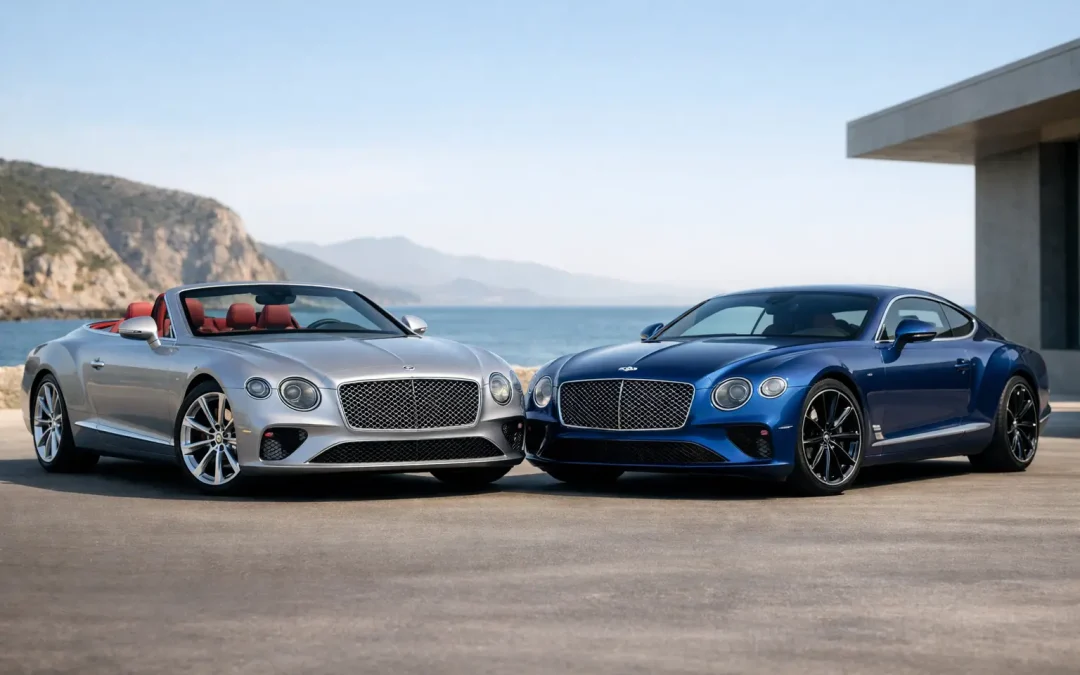
The Bentley GTC vs Continental GT question is less about choosing between two unrelated cars and more about deciding how you want to enjoy Bentley ownership. Both deliver the imposing presence, all-weather performance, handcrafted cabin, and long-distance ability that made the modern Continental such a success. The real difference is whether the occasion calls for the quiet confidence of a coupe or the special sense of occasion only a proper four-seat Bentley convertible can provide.
For buyers considering early, usable Continental models, the answer should be based on condition, history, intended use, and personal preference rather than badge alone. A well-kept GTC can be exceptional value, while the right Continental GT coupe may suit an owner who values year-round refinement and a more enclosed driving experience.
Bentley GTC vs Continental GT: The Main Difference
The Continental GT is the fixed-roof coupe. The Continental GTC is its convertible counterpart, using a powered fabric roof that allows the car to change character in seconds. Mechanically, the two cars are closely related within the same generation. They commonly share engines, transmissions, four-wheel-drive systems, braking hardware, interior architecture, and much of the suspension design.
The GTC is not simply a Continental GT with its roof removed. Bentley reinforced the body structure to preserve rigidity and safety, and the convertible roof mechanism adds weight and complexity. In return, it offers an experience the coupe cannot replicate: open-air grand touring with the quiet authority of a Bentley cabin around you.
For many enthusiasts, that is precisely the point. The GTC turns an ordinary drive to dinner, a country hotel, or a weekend event into an occasion. With the roof raised, it remains a refined luxury car; with the roof lowered, it becomes one of the most distinctive ways to cover distance in a modern British grand tourer.
How They Feel on the Road
A Continental GT coupe generally feels slightly more settled and insulated. Its fixed roof gives it a marginal advantage in body stiffness, cabin quietness, and high-speed composure. This is most noticeable on poor road surfaces and during sustained motorway use, where the coupe’s structure filters out a little more noise and movement.
The GTC is still a serious long-distance car, not a compromised fair-weather cruiser. Bentley engineered these cars for fast, comfortable touring, and a properly maintained example feels suitably solid. However, the driver may notice a little more scuttle shake over uneven roads, particularly on earlier cars or examples with tired suspension components. That is not necessarily a fault. It is part of the convertible’s character, but it should be judged sensibly during a test drive.
Roof down, the GTC has the clear advantage. The exhaust note, the sightlines over the long hood, and the sense of arriving somewhere in a Bentley convertible give it a presence that few cars can match. For owners who use their car on sunny weekends, continental trips, or special occasions, the GTC often provides more memorable ownership per mile.
Cabin, Practicality, and Everyday Use
Both cars offer a genuinely special cabin. Earlier Continental models have a more traditional feel, with extensive leather, veneers, substantial switchgear, and an unmistakably Bentley sense of weight and craftsmanship. Later cars bring improved infotainment, updated controls, and a more contemporary finish, but the appeal remains the same: this is a cabin designed for comfort rather than minimalism.
The coupe is the more practical choice if rear-seat access matters regularly. Its rear seats are not limousine accommodation, but the fixed roof makes entry and exit less awkward, and it is often better suited to luggage-heavy touring. The GTC retains four seats, which is a major advantage over many luxury convertibles, although rear passengers are best treated as occasional guests rather than full-time occupants.
Trunk space also deserves consideration. The GTC’s roof mechanism takes up room when folded, so buyers who regularly travel with large cases, golf equipment, or several passengers should assess it honestly. For two people on a weekend away, it is usually more than adequate. For extended touring with four adults, the coupe makes more sense.
Engines and Generations Matter More Than the Body Style
The earliest Continental GT and GTC models are usually powered by Bentley’s 6.0-liter twin-turbocharged W12. This engine is a major part of their appeal: smooth, effortless, and enormously capable. It delivers performance that still feels substantial, with a broad wave of torque rather than a frantic, high-revving character.
Later cars introduced updated W12 versions and, in certain generations, the 4.0-liter twin-turbocharged V8. The V8 is lighter in feel and often more economical in real-world use, while still providing ample performance and a more pronounced exhaust note. The W12 remains the traditional choice for buyers who want the full Bentley experience, especially in early cars, but it carries greater complexity and potentially higher running costs.
There is no universally correct engine. A buyer who values effortless cruising, specification, and traditional twelve-cylinder appeal may favor the W12. Someone planning to use the car more frequently may find the V8’s balance of performance and operating costs particularly attractive. In either case, maintenance history should carry more weight than a small difference in mileage or a tempting headline price.
Ownership: Where Condition Separates the Good Cars
A Continental GT or GTC can be a deeply satisfying purchase when bought carefully. It can also become expensive when previous maintenance has been deferred. These are sophisticated luxury cars, and bargain pricing does not reduce the cost of specialist parts, diagnostics, tires, brakes, or skilled labor.
On a GTC, inspect the roof operation carefully. It should open and close smoothly, without warning lights, hesitation, unusual noises, or signs of water ingress. Check the roof fabric, seals, headliner, rear glass, drains, and the condition of the surrounding trim. A roof that works today but has been neglected for years may need attention later, so evidence of proper care is valuable.
On both body styles, pay close attention to air suspension operation, ride height, suspension wear, brake condition, battery health, electrical functions, cooling systems, and transmission behavior. A full inspection should include diagnostic scanning as well as a road test. Service records should show not only routine oil changes but also evidence that age-related work has been addressed before it became urgent.
Cosmetic condition matters as well. Bentley paintwork, leather, wood veneer, brightwork, and wheel finishes are expensive to put right properly. A car with a clean history, attractive specification, and well-preserved interior is often the better purchase, even if it costs more at the outset.
Which Bentley Should You Buy?
Choose the Continental GT coupe if you want the most composed all-season grand tourer, expect to cover regular long distances, or prefer the cleaner silhouette and extra degree of cabin isolation. It is the understated choice, though there is nothing modest about a Continental GT.
Choose the GTC if ownership is as much about the experience as the destination. The convertible suits buyers who want to use their Bentley for weekends, events, coastal drives, and memorable touring. It also makes strong sense for collectors who appreciate the value proposition of a well-specified early GTC, provided its roof, body, and maintenance record have received the attention they deserve.
At Tedella Ltd, more than 25 years of hands-on prestige-car experience has reinforced a simple principle: buy the best-maintained example you can find, not merely the lowest-priced one. A carefully chosen Continental can provide the craftsmanship, performance, and pride of ownership that first drew you to Bentley in the first place. The right roofline is the one that will make you want to take the long way home.
Recent Comments