
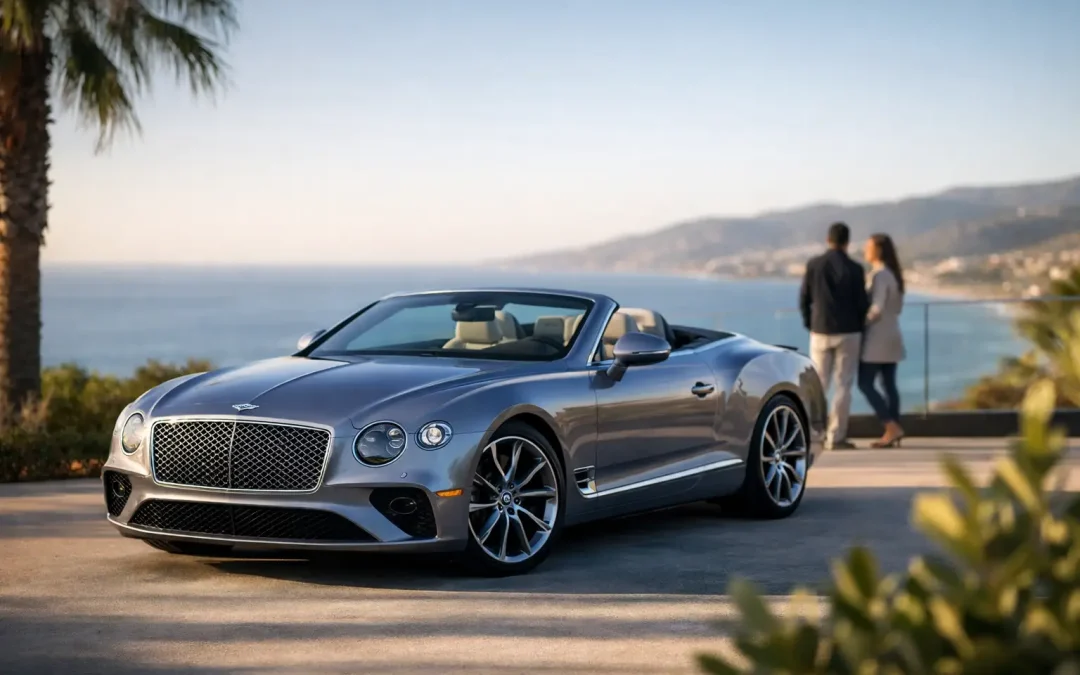
A well-chosen Bentley Continental GTC offers something few modern cars can match: genuine long-distance comfort, effortless performance, hand-finished surroundings, and the occasion of open-top motoring. This Bentley GTC buyer review is written for buyers who want the right car, not simply the lowest advertised price. With these cars, specification matters, history matters more, and condition matters most.
The Continental GTC is often described as a bargain because purchase prices have fallen far below their original levels. That can be true, but it should never be mistaken for cheap ownership. A neglected example can quickly consume the saving made at purchase. A properly maintained car, however, remains one of the most usable prestige convertibles available.
Which Bentley GTC suits your ownership plans?
The first question is not whether you want a GTC, but how you intend to use it. Early 2005-2011 cars have a distinctive appeal. Their 6.0-liter twin-turbo W12 delivers enormous, understated performance, while the cabin has the traditional Bentley atmosphere many buyers value. These cars are now old enough for condition and maintenance to outweigh mileage alone.
Later second-generation GTCs from 2011 onward feel more modern in their design, infotainment, and driving manners. They are generally more refined and can make sense for frequent touring. The V8 GTC is lighter at the front, more economical than the W12, and has an excellent character of its own. The W12 remains the choice for buyers who want the full Bentley experience and effortless acceleration at any speed.
There is no single correct answer. A weekend car may justify a more original early W12 with lower mileage and a particularly desirable color combination. A buyer covering regular miles may be better served by a later V8 or a younger W12 with comprehensive recent servicing. Buy the car that fits the use, rather than buying a headline engine or model year.
Bentley GTC buyer review: start with provenance
The strongest GTCs have a clear, continuous service record supported by invoices, inspection reports, and evidence of meaningful maintenance. Stamped service books are useful, but they do not tell the whole story. Detailed paperwork shows what has actually been addressed and who carried out the work.
Look for evidence of routine servicing as well as work on age-related items. A car that has received only basic annual attention may still be approaching substantial expenditure. Conversely, a car with invoices for suspension work, brakes, tires, cooling-system attention, battery replacement, and roof maintenance may represent far better value, even if the asking price is higher.
Mileage should be viewed in context. A low-mileage Bentley that has spent long periods unused may need recommissioning, while a higher-mileage example maintained by knowledgeable specialists can be a more dependable proposition. Long periods of inactivity are particularly unkind to batteries, seals, tires, brake components, fluids, and convertible roof systems.
A pre-purchase inspection by a Bentley specialist is sensible on every car, including one offered with an apparently excellent history. It is not an expression of distrust. It is the proper way to understand the vehicle before committing to a complex luxury car.
Inspect the convertible roof with patience
The roof is central to the GTC experience, so it deserves more than a quick demonstration. Operate it through a complete cycle, ideally more than once. It should move smoothly, latch correctly, and finish its operation without warning messages, hesitation, unusual noises, or manual assistance.
Inspect the fabric hood closely for wear, staining, abrasion, poor repairs, and damage around the folds. Check the rear screen and surrounding seals. Water ingress is not always obvious in a well-presented car, so lift carpets where practical and inspect the trunk area for signs of dampness, corrosion, musty odors, or electrical issues.
The roof should sit evenly when closed, with tidy panel gaps and seals that appear properly seated. A poorly aligned roof may be the result of adjustment requirements, previous repair work, or a more involved fault. The reason needs to be established before purchase, not after the first rainstorm.
Mechanical checks that protect your budget
A GTC should start cleanly, settle to a smooth idle, and drive with quiet confidence. Warning lights, rough running, smoke, obvious leaks, or reluctance to select gears warrant investigation. The automatic transmission should shift smoothly under gentle driving and respond cleanly when asked for more power.
Air suspension is one of the main areas to assess. The car should sit level after being parked and should raise or lower correctly when selected. Listen for an overworked compressor and pay attention to any suspension warnings. Worn components can affect ride quality and handling long before a dashboard message appears.
On the road, the Bentley should feel substantial but controlled. Clunks over rough surfaces, vague steering, vibration through the wheel, or a persistent pull under braking can point to worn suspension components, wheel issues, alignment problems, or brake wear. Given the size and performance of the car, tires and brakes are not minor consumables. Confirm their condition, age, brand, and remaining life.
For W12 cars, proper cooling-system maintenance is particularly valuable. The engine bay is tightly packaged, and deferred repairs can become expensive simply because of the labor involved. Check that the engine reaches temperature normally and that there is no smell of coolant, evidence of overheating, or unexplained loss of fluid.
Cabin condition reveals the standard of care
A Continental GTC cabin contains leather, veneer, brightwork, switchgear, and electronics that are costly to restore properly. Normal light wear is acceptable in a used car, but the condition should reflect the claimed mileage and overall presentation.
Inspect the driver’s seat bolster, steering wheel, door pulls, carpets, seat controls, and veneer surfaces. Test the windows, seat functions, climate control, navigation, audio system, parking sensors, central locking, and instrument displays. Electrical faults can be minor, but a collection of small issues often indicates a car that has not received the attention it deserves.
Do not be distracted by a freshly detailed interior. A specialist presentation should enhance an already honest car, not conceal tired trim, moisture damage, or malfunctioning equipment. Original books, keys, tools, and factory accessories are also worthwhile, particularly for collectors and buyers seeking a complete ownership package.
Specification, color, and value
The GTC was offered with an enormous variety of colors, leathers, veneers, wheels, and options. This is part of its appeal, but it also affects resale. Timeless exterior colors, well-kept neutral or rich leather interiors, and a tasteful factory specification tend to have the broadest appeal.
That does not mean every buyer should choose silver over a more individual color. A rare or unusual specification can be highly attractive when it is coherent and well maintained. The key is to avoid buying a compromised car because its color is appealing, or paying a premium for options that do not improve its actual condition.
Modifications require judgment. Discreet upgrades completed to a high standard may suit an owner who intends to enjoy the car regularly. For a buyer focused on long-term collectibility, originality is usually the safer path. Always establish whether modifications can be documented, serviced, and reversed if necessary.
The price is only the start of the decision
A sensible GTC purchase includes a reserve for immediate maintenance and ongoing care. Insurance, fuel, tires, servicing, specialist labor, and unexpected repairs should all be considered before purchase. These cars reward owners who maintain them proactively rather than waiting for faults to become urgent.
The cheapest car is rarely the least expensive car to own. A stronger example with documented recent expenditure, a correct roof, healthy suspension, and a well-kept interior may command more initially, but it gives the next owner a far better starting point. That principle is especially relevant in the early GTC market, where values can be tempting enough to encourage rushed decisions.
At Tedella Ltd, our approach is to focus on usable, properly assessed Bentley GTCs and to support owners beyond the initial purchase. For buyers in North London, Hertfordshire, and the surrounding area, specialist inspection, repair, restoration, and part-exchange support can make ownership far more straightforward.
Take your time, inspect the details, and buy on evidence rather than optimism. The right Bentley GTC will feel special from the first drive and continue to do so because it has been cared for in the manner a hand-built grand tourer deserves.
Recent Comments