
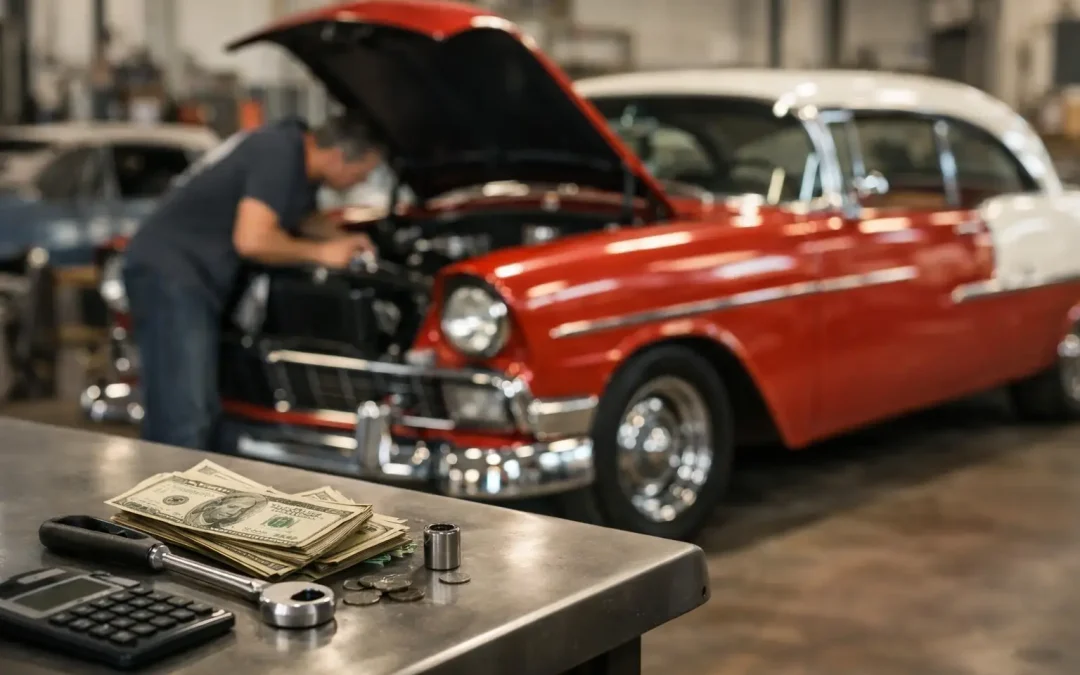
A restoration estimate can look reasonable on day one and very different once the car is stripped back. That is why owners so often ask, how much does classic car restoration cost, and why the honest answer is always tied to condition, originality, and the standard you expect at the end.
For a usable driver, you may be looking at a controlled, targeted project. For a prestige British car that needs metalwork, paint, trim, mechanical rebuilding, and careful parts sourcing, the figure climbs quickly. The biggest mistake owners make is assuming restoration is one fixed price. It is not. It is a series of decisions, each with a cost and a consequence.
How much does classic car restoration cost in real terms?
A light restoration or refurbishment can start in the low thousands if the car is fundamentally solid and only needs selective paint correction, interior repairs, minor chrome work, servicing, and a few cosmetic improvements. That sort of work might sit around $5,000 to $15,000, depending on the vehicle and the quality of finish required.
A more serious restoration on a premium classic, especially one with corrosion, tired trim, neglected mechanicals, or missing parts, can easily run from $25,000 to $80,000 and beyond. Full bare-metal, body-off, or concours-level projects regularly exceed that. On prestige marques, six-figure restorations are not unusual when the goal is factory-correct presentation and long-term value preservation.
That wide range is not evasive. It reflects reality. A Bentley, Aston Martin, or Jaguar with strong bones but tired presentation is a very different proposition from a car that has been sitting for years with hidden rust, poor past repairs, and incomplete history.
What actually drives restoration cost?
The bodywork is often where budgets change fastest. Paint may seem like the headline item, but proper body preparation is where the labor sits. Rust repair, panel alignment, fabrication, lead loading on older cars, and correcting previous poor workmanship take time. A quality paint finish is only as good as the metal beneath it.
Mechanical work is the next major factor. An engine that runs is not necessarily a healthy engine. Compression issues, oil leaks, cooling system weaknesses, worn carburetors, tired suspension bushings, brake overhauls, electrical faults, and transmission problems all add up. On prestige British vehicles, parts and specialist labor can be substantial, especially if originality matters.
Trim and interior restoration can also surprise owners. Leather retrimming, wood veneer refinishing, carpets, headliners, convertible tops, gauges, and switchgear restoration are specialist jobs. On a high-end classic, a tired interior can undermine the entire car, while a properly restored cabin can transform it.
Parts availability is another major variable. Some items are readily available off the shelf. Others require patient sourcing, refurbishment of original components, or custom remanufacture. Rare trim pieces, correct brightwork, period-correct fittings, and marque-specific mechanical components can all stretch both budget and timeline.
The biggest cost difference is the restoration standard
When owners ask how much does classic car restoration cost, they are often really asking what level of result they should pay for. There is a clear difference between a sympathetic refurbishment, a high-quality road restoration, and a concours-level rebuild.
A sympathetic refurbishment focuses on preserving as much of the car as possible while making it dependable, presentable, and enjoyable. This is often the right choice for an owner who wants to drive the car regularly and respect its age rather than erase it.
A road restoration goes further. It aims for strong cosmetics, sound mechanicals, and a finish that feels complete and correct. This is where many enthusiast-owned prestige cars sit best. The vehicle looks right, drives properly, and supports long-term ownership without the fragility or cost of a show-only standard.
A concours restoration is another world. Every finish, fitting, material, and mechanical detail is scrutinized. It can make sense for rare, high-value cars, but it is not always commercially sensible on every model. If the restoration cost overtakes realistic market value by a large margin, the project becomes a passion decision rather than an investment decision.
Why estimates change after disassembly
No experienced restoration specialist will promise absolute certainty before the car is taken apart. Surface inspection only reveals so much. Once trim, paint, underseal, and mechanical components are removed, hidden corrosion, filler, accident damage, or earlier shortcut repairs often come to light.
This is not a sign of poor planning. It is the nature of classic cars. A proper shop should explain this from the outset, document what is found, and discuss options before costs escalate. That level of communication matters as much as the technical work itself.
Owners should be wary of unrealistically low starting quotes. They may win the job, but they rarely deliver clarity. A more detailed initial assessment, followed by staged approvals as the project progresses, is usually the more dependable route.
Should you restore the whole car or only what it needs?
Not every classic benefits from a full restoration. In many cases, selective work is the smarter move. If the paint presents well, the structure is sound, and the car retains a pleasing originality, targeted mechanical and cosmetic improvements may protect value better than a complete strip-down.
This is especially true for cars with honest patina, strong provenance, or collector appeal in largely original condition. Over-restoration can sometimes diminish character. On the other hand, if corrosion is active, the interior is beyond saving, and the mechanical condition is poor, partial work may only delay a larger bill.
A specialist should help you decide whether the car needs preservation, refurbishment, or a true restoration. That judgment comes from experience, not guesswork.
Hidden costs owners often miss
Transportation is one. Non-running or partially dismantled vehicles often need collection and delivery by trailer or enclosed transport. Storage can also become a factor if the project is delayed by parts supply or owner decisions.
Then there is the cost of doing related jobs while the car is apart. It often makes sense to replace weather seals, rebuild suspension components, refresh wiring, or service hard-to-reach systems once access is available. These are sensible costs, but they still add to the total.
Documentation and provenance work can matter too, particularly on premium British classics. Matching numbers verification, heritage records, and correct specification checks may not be the largest line items, but they can influence final value and should not be treated as an afterthought.
Is restoration worth the money?
Sometimes yes, sometimes no. If the car has sentimental value, rarity, desirable specification, or long-term collectability, restoration can be fully justified even when the numbers are close. If the model is common, badly compromised, or worth less than the projected spend by a wide margin, buying a better example may be the wiser financial decision.
That is where specialist guidance becomes valuable. An experienced restorer will not simply tell you what can be done. They should tell you what makes sense. There is real value in being advised not to overcapitalise on the wrong car.
For many owners, the goal is not profit. It is preserving a car properly, enjoying it with confidence, and knowing the work has been carried out to the right standard. On prestige marques, quality workmanship also helps protect future saleability.
How to budget sensibly for a restoration
Start with the best car you can afford. Buying cheaply and restoring heavily is often more expensive than paying more upfront for a stronger example. That principle holds true again and again.
Set your goal early. Do you want a dependable weekend driver, a sharp show car, or a factory-correct collector piece? If that is unclear, costs drift. Once the objective is defined, the restoration plan becomes much easier to control.
Keep a contingency. Ten to twenty percent is sensible, and on more complex projects it may need to be higher. Classic cars have a habit of revealing one more job that really should be done while access is available.
Most importantly, choose a specialist with proven experience in the marque or style of car you own. On Bentley, Aston Martin, Jaguar, and similar heritage vehicles, the difference between general repair work and proper restoration knowledge is significant. A seasoned specialist can often save money by avoiding poor parts choices, unnecessary duplication, and incorrect finishes. With more than 25 years of hands-on experience, Tedella Ltd understands that owners want straight answers, sensible options, and workmanship that respects both the car and its value.
If you are weighing up a project, the right question is not just how much it will cost. It is what standard the car deserves, what result you want to live with, and whether the work will leave you with a classic you are proud to own and confident to use.
Recent Comments